What Extra Costs to Expect When Buying a Condo in Pattaya
Transfer fee, monthly maintenance, utilities, repairs and the sinking fund: the full cost of buying and owning a condo in Thailand, worked through on a 38 sq.m. studio in Pattaya.

Short answer: on top of the price, budget about 1% of the official appraised value for your share of the transfer fee, and roughly ฿40 000–80 000 a year to own and run a 38 sq.m. studio in Pattaya. A new development usually adds a one-time sinking fund contribution.
Buying a condominium in Thailand involves more than paying the purchase price. Buyers should also budget for transfer fees, monthly maintenance charges, utilities, internet and occasional repairs. Knowing these costs in advance shows the real cost of ownership and makes the decision easier.
Below we go through each cost of buying and owning a condo in Thailand, using a studio in Pattaya as a worked example.
1. The purchase price
The purchase price is the largest expense. It depends on the location, building, unit size, floor, view, condition, furnishing and ownership quota. If you are still deciding on a budget, see what a condo costs in Pattaya in 2026.
For foreign buyers, check that the unit can be registered in your name under the building’s 49% foreign ownership quota.
Example: a studio at The Cliff, Pattaya
- Property type: studio condominium
- Size: 38 sq.m.
- Floor: high floor
- Ownership: foreign quota
- Furnishing: furnished
- Purchase price: ฿3 100 000 (about $92 537)
This example shows the typical costs of buying and owning a resale condo. Actual expenses depend on the terms of the deal and on how the owner uses the property.
2. Transfer fee and transaction costs
When a condo is transferred at the Land Office, a transfer registration fee applies. The standard fee is 2% of the official appraised value of the unit.
Buyer and seller often split it equally, but they can agree a different split in the sale agreement. The fee is calculated on the official appraised value, which can differ from the purchase price.
For illustration, assuming an appraised value of ฿3 100 000 and a 50/50 split:
| Item | Amount (฿) | Approx. amount ($) |
|---|---|---|
| Total transfer fee (2%) | ฿62 000 | $1 851 |
| Buyer’s share (50%) | ฿31 000 | $925 |
The seller usually pays withholding tax and either specific business tax (3.3%, if the unit was owned for less than five years) or stamp duty (0.5%). Legal fees and other costs depend on the deal. Confirm in writing who pays each item before you sign the sale agreement.
3. Monthly common area maintenance fee
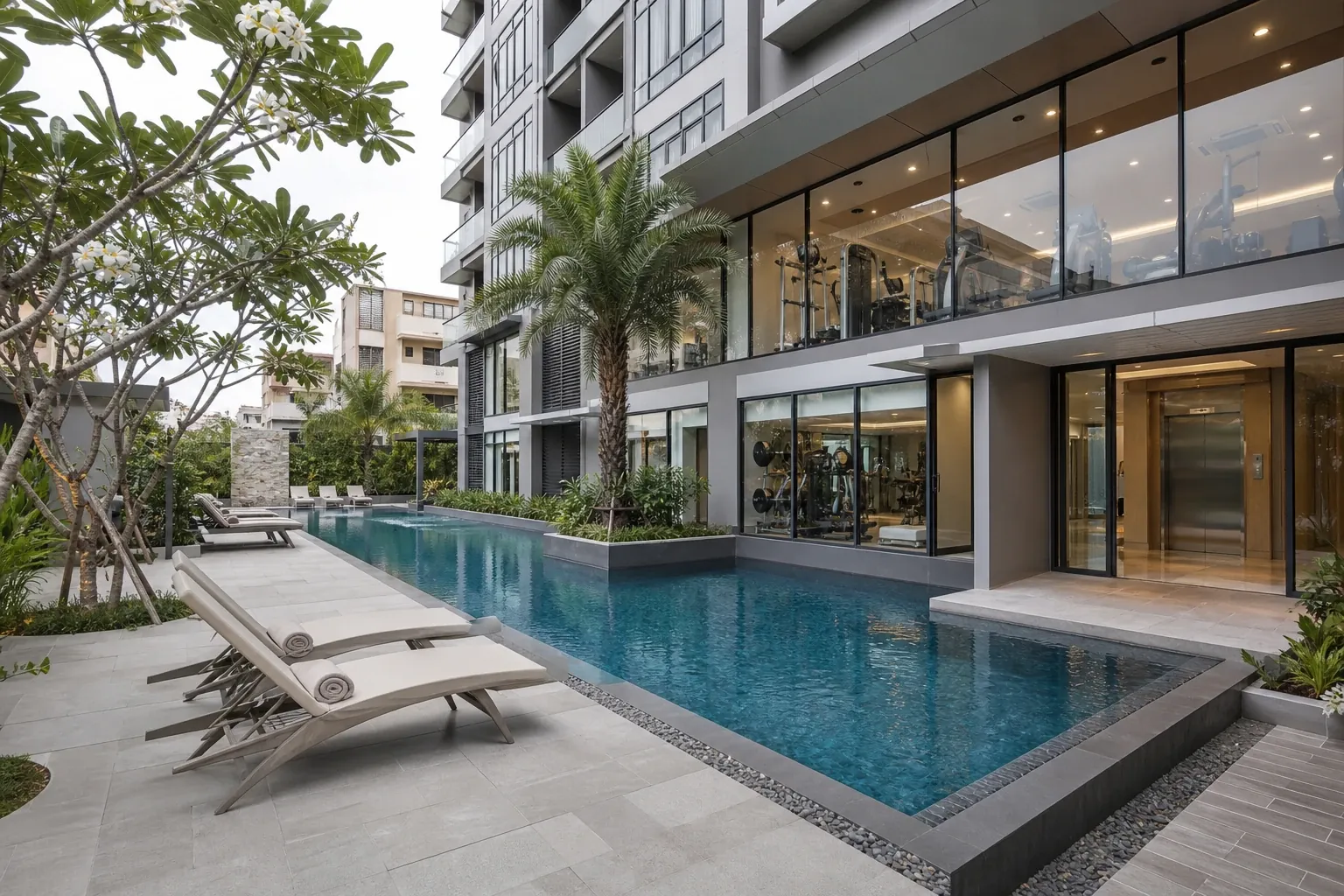
Condo owners pay a common area maintenance (CAM) fee. It pays for the upkeep of shared facilities and common areas: pools, gyms, lifts, gardens, security and building maintenance.
The fee is calculated per square metre and paid on the building’s billing schedule, monthly or once a year. For the 38 sq.m. studio in this example:
| Item | Amount (฿) | Approx. amount ($) |
|---|---|---|
| Monthly CAM fee | ฿1 558 | $47 |
| Annual CAM fee | ฿18 696 | $558 |
The exact fee and payment schedule vary from building to building.
4. Utilities and internet
Electricity, water and internet are extra. The amount depends on how often the unit is occupied, how much the air conditioning runs, the number of occupants and the internet package.
For budgeting, these annual estimates work for this example:
| Expense | Estimated annual cost (฿) | Approx. annual cost ($) |
|---|---|---|
| Electricity and water | ฿12 000–36 000 | $358–1 075 |
| Internet | ฿6 000–12 000 | $179–358 |
These are estimates, not fixed tariffs. Actual bills can be lower or higher depending on use and the provider.
5. Maintenance, repairs and replacements
Even a furnished condo needs occasional repairs. Air-conditioning servicing, appliance repairs, plumbing and small household items all add to the yearly cost of ownership.
A practical allowance for this studio is about ฿5 000–15 000 ($149–448) a year. It is a planning reserve, not a guaranteed expense. Larger repairs would need a bigger budget.

6. Sinking fund: a possible one-time cost
New developments charge a one-time sinking fund contribution. The fund pays for major repairs and the long-term upkeep of the building’s common areas.
The amount and terms depend on the project. For illustration, at ฿500–800 per sq.m. a 38 sq.m. unit would need ฿19 000–30 400 (about $567–907).
The sinking fund is not included in the resale example above. Check whether it applies to your purchase and whether it has already been paid.
7. Property management if you rent the condo out
If you plan to rent the condo out, budget for property management: tenant communication, check-ins, cleaning and maintenance.
Management fees depend on the provider and the agreement, so they are not in the example below. Rental income can also be taxable; how depends on the owner’s situation and the rental arrangement.
8. Example: total cost of buying and owning a condo in Pattaya
The table brings together the purchase costs and the estimated first-year running costs for the 38 sq.m. studio at The Cliff.
| Cost item | Amount (฿) | Approx. amount ($) |
|---|---|---|
| Purchase price | ฿3 100 000 | $92 537 |
| Buyer’s share of transfer fee | ฿31 000 | $925 |
| Initial purchase cost | ฿3 131 000 | $93 463 |
| Annual CAM fee | ฿18 696 | $558 |
| Electricity and water | ฿12 000–36 000 | $358–1 075 |
| Internet | ฿6 000–12 000 | $179–358 |
| Maintenance and repair reserve | ฿5 000–15 000 | $149–448 |
| Estimated first-year running costs | ฿41 696–81 696 | $1 245–2 439 |
| Purchase cost plus first-year expenses | ฿3 172 696–3 212 696 | $94 707–95 901 |
These figures are estimates for budgeting. They exclude transaction-specific taxes or legal fees, property management, financing, furnishing upgrades and any sinking fund that may apply to another property.
9. How much should you budget?
It helps to split the costs of a condo in Thailand into three groups:
- Initial costs: purchase price, your share of the transfer fee and any transaction or legal costs.
- Recurring costs: common area maintenance, utilities and internet.
- Occasional costs: repairs, appliance replacement and other unexpected expenses.
If you are buying to rent out, add management costs and allow for empty months when you estimate the return.
The most reliable estimate comes from the specific building’s fees, transfer terms confirmed in writing and a realistic maintenance reserve. We help buyers work out the full cost of a property in Pattaya and compare options by budget and goals.
Planning to buy a condo in Pattaya? Answer four questions for a shortlist, or contact us to go through the costs of a specific unit.
Currency note: Dollar amounts use an indicative rate of ฿33.5 per $1 on 20 October 2026, for illustration only. All amounts are estimates, not a quotation. Confirm the property details, appraised value, fees and who pays what before you proceed.