Buying Property in Thailand as a Foreigner: 2026 Guide
What a foreigner can own in Thailand, how the 49% condo quota works, how to pay, which taxes apply and how to buy from abroad: a step-by-step guide.

Short answer: a foreigner can buy a condo in Thailand in their own name, as long as the unit is registered under the foreign quota and the money comes from abroad. Land cannot be owned by a foreign individual, so houses and villas are held through a registered lease or another legal right. The rest of the purchase, including viewing, signing and paying, can mostly be done remotely.
This guide walks through the whole purchase in order and links to a detailed article for every step. It is general information, not legal advice for a specific deal.
1. What a foreigner can own
There are three main routes, and the right one depends on what you want to buy.
| Property | How a foreigner holds it | What you get |
|---|---|---|
| Condo unit | Freehold under the foreign quota | A title deed (chanote) in your name: you can sell, rent out or leave it to heirs |
| House or villa | The building in your name, the land on a registered lease | A lease of up to 30 years, registered at the Land Office |
| Other rights | Usufruct, superficies or Sap-Ing-Sith | A registered right to use or build, not ownership of the land |
Promises of “30 + 30 + 30 years” are not the same as a registered 90-year right: only the first term of up to 30 years can be registered. A Thai company that does not run a genuine business is not a lawful way around the rules. More in can foreigners own property in Thailand and our guide to Sap-Ing-Sith.
2. Check the foreign quota before the deposit
In a Thai condominium, foreigners together can own up to 49% of the total floor area of all units. A unit in the Thai quota cannot normally be registered as freehold in a foreigner’s name, so this is the first thing to confirm.
- New development: the reservation agreement and the Sale and Purchase Agreement should state that the unit is sold under the foreign quota.
- Resale: the confirmation comes from the building’s juristic person office, through your lawyer or the owner. If you pay a deposit before you have it, the deposit agreement should make the deposit refundable if the quota turns out to be unavailable.
Details in the foreign quota guide.
3. New development or resale
A unit in a building under construction is usually paid for in stages: a reservation fee, a deposit when the contract is signed, instalments during construction and the balance at handover. The percentages and dates differ by developer, so the contract sets the terms, not the brochure.
A resale unit is usually paid with a deposit when the deal is agreed and the balance on the day of transfer at the Land Office. Before either, check the title deed, the seller’s ownership and that there are no unpaid common fees.
How staged payments work, and what to check if construction is delayed: off-plan payment plans.
4. How to pay
Most foreign buyers pay with their own funds rather than a Thai mortgage. For a condo in your own name, the money has to be sent to Thailand from abroad in foreign currency, with the purpose of the transfer stated, and converted to baht by a Thai bank. The bank then issues a Foreign Exchange Transaction (FET) form or a credit advice, and the Land Office asks for it at the transfer.
Keep these bank papers: you need them later to send the money back home when you sell.
Step by step: how foreigners pay for property in Thailand.
5. Taxes and fees at the transfer
| Tax or fee | Rate | Who usually pays |
|---|---|---|
| Transfer fee | 2% of the appraised value | Buyer and seller, often half each |
| Specific Business Tax | 3.3%, when it applies | Seller |
| Stamp duty | 0.5%, when Specific Business Tax does not apply | Seller |
| Withholding tax | Depends on the seller | Seller |
The reduced 0.01% transfer fee announced by the government applies to Thai individual buyers only, not to foreigners. After the purchase, the owner pays a small annual Land and Building Tax, and a condo also has a monthly common area fee and, in a new building, a one-time sinking fund contribution.
Rates, exemptions and who pays what: Thailand property taxes in 2026. Running costs: extra costs of owning a condo.
6. Buying without flying in
Most of the purchase can be done from abroad: live video viewings, document checks, signing the contract, paying and registering the transfer. If you cannot be at the Land Office on the day, a Power of Attorney lets a representative sign for you, and the title deed is sent to you by courier.
The full sequence in twelve steps: can you buy property in Thailand without flying in.
7. Does buying give you a visa?
No. Owning property in Thailand does not by itself give you the right to stay. Some developers include a visa package with certain units, and long-stay options such as Thailand Privilege are paid for separately. See does buying property in Thailand get you a visa.
8. Where people buy: Pattaya and Phuket
Pattaya is about two hours by road from Bangkok’s Suvarnabhumi Airport. Its areas differ more than the map suggests:
| Area | What it is like |
|---|---|
| Wongamat and Naklua | The north end of the bay: a quieter beach lined with high-rise condos |
| Central Pattaya | The city centre: Beach Road, shopping, restaurants and nightlife |
| Pratumnak | The hill between Pattaya Bay and Jomtien: green, quieter, small beaches |
| Jomtien | A long beach south of Pratumnak, popular with long-stay residents |
| Na Jomtien | Further south: newer resort-style buildings and calmer beaches |
| Huay Yai and East Pattaya | Inland: houses and pool villas on larger plots, lakes and golf courses |
| Bang Saray | A seaside village south of the city, the quietest of the list |
On Phuket, buyers mostly look at the west coast: Bang Tao and Laguna, Layan, Surin and Karon, with resort-style residences close to the beaches.
9. Checklist before you pay a deposit
- The route of ownership is clear: freehold condo, lease, or another registered right.
- The unit is confirmed in writing as available under the foreign quota.
- You have read the reservation agreement and the Sale and Purchase Agreement, including what happens to the deposit.
- The bank has confirmed how the money should be sent and which papers you will receive.
- You have an estimate of the transfer costs and know who pays each item.
How Prime Loft can help
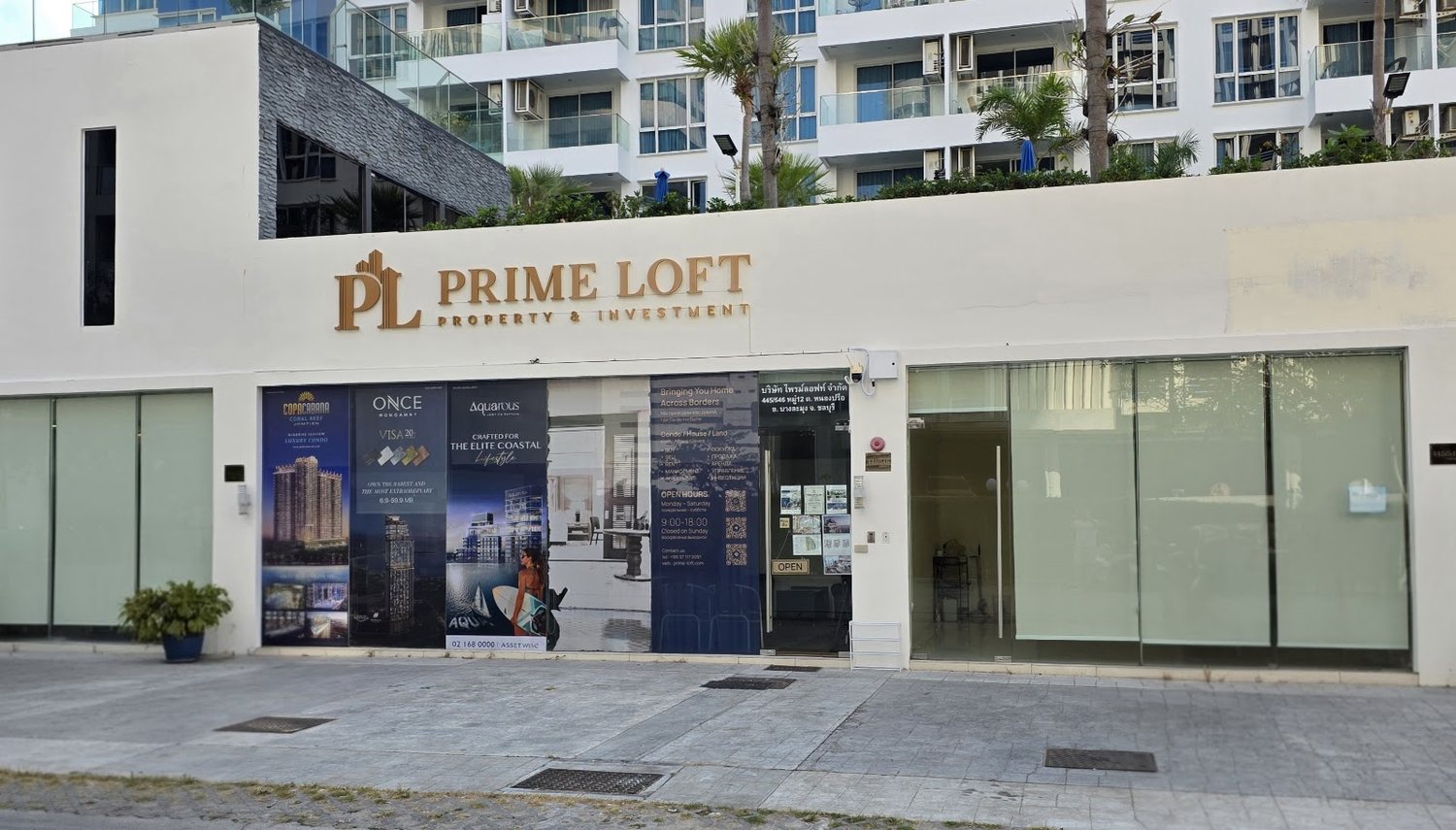
We are a real estate agency with an office in Pattaya. We help buyers choose the ownership route, check the quota and the documents, arrange viewings in person or by video, and coordinate with developers, building management and lawyers until the keys are handed over. We work in English, Russian and Thai.
Have a question about a specific purchase? Write to us.
This guide is general information, not legal or tax advice. Rules and rates change: confirm the details of your transaction with a qualified Thai lawyer, your bank and the Land Office.